
This Heartbeat Review explores features, benefits, pricing, and real use cases to help you decide if it’s the best community platform in 2026.
Introduction
In today’s digital economy, building a community is no longer optional—it’s a core growth strategy. Whether you’re a content creator, educator, SaaS founder, or online business owner, your ability to build and nurture a community directly impacts engagement, retention, and revenue.
However, most people quickly run into a frustrating reality: community building requires too many disconnected tools.
You might start with a Facebook Group for discussions, use Zoom for live sessions, Stripe for payments, Notion or Google Drive for content delivery, and email tools for communication. While each of these tools works individually, combining them creates friction, complexity, and inefficiency.
This is exactly the problem Heartbeat is trying to solve.
Heartbeat is an all-in-one community platform designed to bring everything together—discussions, events, courses, payments, and automation—into a single unified system. Instead of managing multiple platforms, you can operate your entire community from one dashboard.
From a strategic perspective, this is a major shift. It allows creators and businesses to focus less on tools and more on delivering value.
👉 Quick verdict: Heartbeat is one of the most promising community platforms in 2026, especially for those looking to monetize and scale their communities. However, it’s not a one-size-fits-all solution, and understanding its strengths and limitations is essential before making a decision.

What Is Heartbeat?
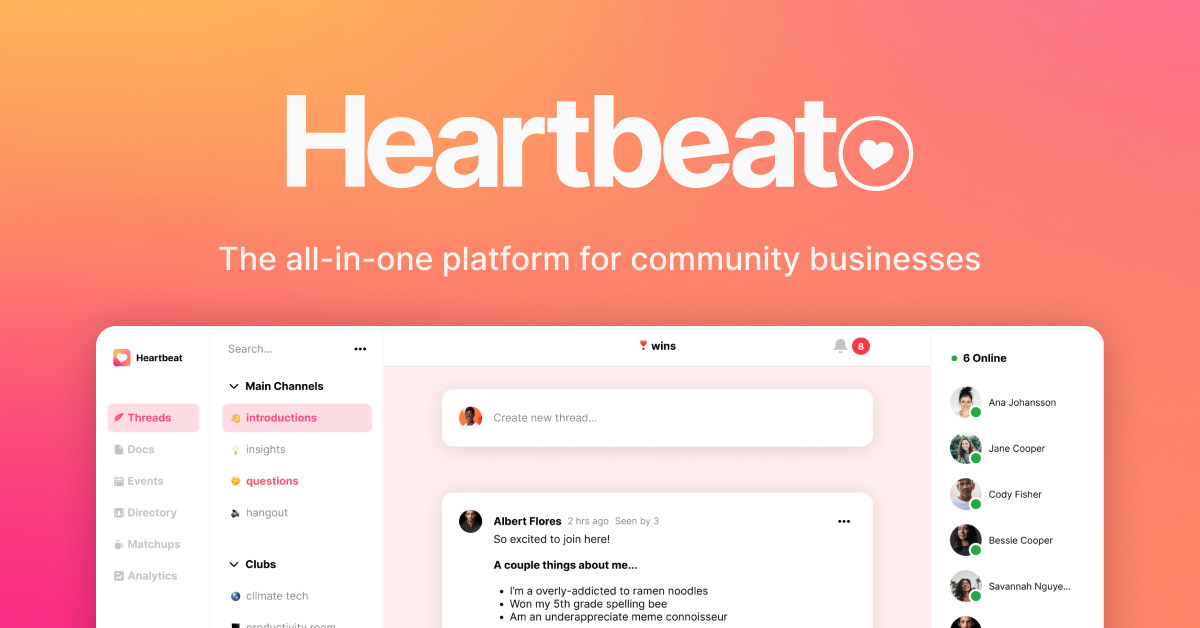
Heartbeat is a modern, business-oriented community platform built specifically for creators, educators, and organizations that want to build engaged, monetized communities.
Unlike traditional communication tools like Slack or Discord, Heartbeat is designed to be much more than a chat system. It combines multiple functionalities into one ecosystem, allowing users to create structured experiences rather than just conversations.
At its core, Heartbeat includes:
- Community discussions and channels
- Live events and video sessions
- Course and content delivery systems
- Membership and payment infrastructure
- Automation and engagement workflows
This combination positions Heartbeat closer to platforms like Circle, Kajabi, and Mighty Networks rather than simple messaging tools.
From a user perspective, this matters because it changes how you think about community. Instead of being just a place for interaction, your community becomes a product—a structured, monetizable experience.
For example, instead of just hosting conversations, you can:
- Sell access to premium groups
- Deliver structured learning programs
- Host live workshops or masterminds
- Build long-term membership ecosystems
This makes Heartbeat particularly valuable for:
- Coaches running cohort-based programs
- Creators building subscription communities
- Online businesses offering premium content
- Startups building user engagement platforms
Another key aspect of Heartbeat is its focus on community-led growth. Many modern businesses are shifting away from traditional marketing funnels toward community-driven ecosystems. Heartbeat is built to support that transition.
Core Features
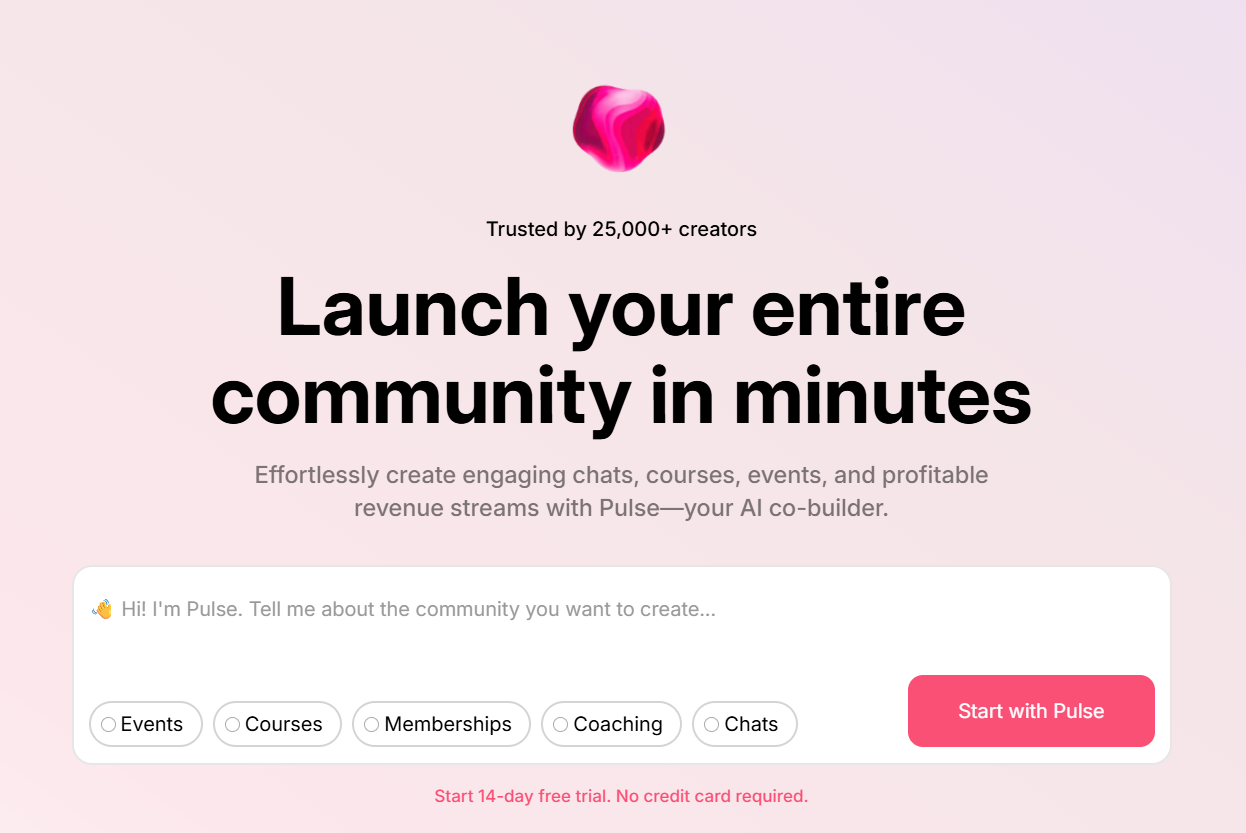
1. Unified Community Dashboard
One of Heartbeat’s biggest advantages is its unified dashboard.
Instead of juggling multiple tools, everything is accessible from one place:
- Discussions
- Member directory
- Content library
- Events
- Notifications
From a usability standpoint, this significantly reduces friction. Users don’t need to learn multiple interfaces or switch between platforms, which leads to higher engagement and better user experience.
In practice, this also improves retention. When everything is centralized, members are more likely to stay active and participate consistently.
2. Structured Discussions and Channels
Heartbeat allows you to organize conversations into structured channels or topics.
This is similar to Slack or Discord but with a more business-focused approach. Instead of chaotic conversations, you can guide discussions into specific categories such as:
- Announcements
- Q&A
- Resources
- Feedback
This structure is essential for scaling communities. Without it, discussions quickly become overwhelming and difficult to navigate.
From a community management perspective, structured discussions help maintain clarity and improve user experience.
3. Course and Content Delivery
One of the most powerful features of Heartbeat is its built-in course system.
You can create structured content experiences by organizing materials into:
- Modules
- Lessons
- Resources
This allows you to deliver educational content directly inside your community without relying on external platforms.
For example, a coach can:
- Upload training videos
- Create step-by-step programs
- Track member progress
This eliminates the need for platforms like Teachable or Kajabi in many cases.
👉 Key advantage:
You can combine learning and community in one place, which significantly improves engagement.
4. Live Events and Real-Time Interaction
Heartbeat puts a strong emphasis on live engagement.
You can host:
- Live video sessions
- Webinars
- Workshops
- Group calls
These events can be scheduled, managed, and accessed directly within the platform.
From a strategic perspective, live interaction is one of the most important drivers of community engagement. It creates stronger connections between members and increases perceived value.
Platforms that rely only on asynchronous communication often struggle to maintain engagement. Heartbeat solves this by integrating real-time interaction into its core functionality.
5. Monetization and Payment System
Heartbeat allows you to monetize your community in multiple ways:
- Subscription memberships
- One-time payments
- Paid events
- Premium content
All payment functionality is integrated into the platform, meaning you don’t need external checkout systems.
From a business standpoint, this is a major advantage. It simplifies the entire revenue process and allows you to focus on growth rather than technical setup.
You can create different tiers of access, offering varying levels of content and engagement.
👉 Example:
- Free community → basic discussions
- Paid tier → exclusive content + events
- Premium tier → coaching + direct access
6. Automation and Workflows
Heartbeat includes automation features that help you scale your community.
These include:
- Automated onboarding sequences
- Event reminders
- Engagement notifications
For example, when a new member joins, you can automatically:
- Send a welcome message
- Guide them through onboarding
- Recommend content
This reduces manual work and ensures a consistent user experience.
7. Integrations
Heartbeat supports integrations with tools such as:
- Zapier
- Zoom
- Google Calendar
While not as extensive as some competitors, these integrations cover most essential workflows.
For advanced users, Zapier allows you to connect Heartbeat with hundreds of other tools.
Pricing (Heartbeat Review)
Pricing is one of the most important factors when evaluating any community platform, especially if your goal is to build a long-term, revenue-generating business. Heartbeat follows a tiered pricing model that scales based on the size of your community and the level of features you need.
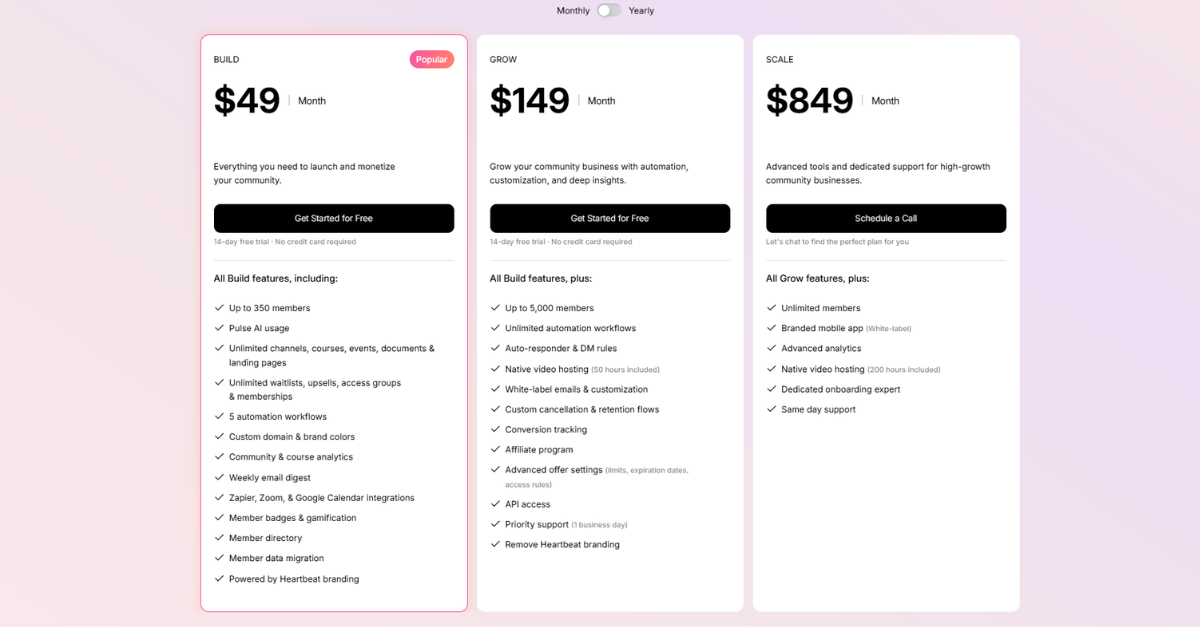
Starter Plan
The Starter plan typically costs around $40–$49 per month and is designed for smaller communities or creators just getting started. It usually includes:
- Core community features
- Basic event hosting
- Content delivery
- Limited number of members (often around 1,000)
From a beginner’s perspective, this plan is more than enough to validate your idea and start building your audience. However, as your community grows, you may quickly outgrow its limitations.
Growth Plan
The Growth plan, priced around $108–$129 per month, is where Heartbeat becomes significantly more powerful. This plan typically includes:
- Unlimited members
- Advanced automation features
- Priority support
- Expanded customization
For most serious creators and businesses, this is the “sweet spot.” It removes scaling limitations and allows you to fully leverage Heartbeat’s ecosystem.
Business Plan
The Business plan is tailored for larger organizations and enterprise use cases. Pricing is usually custom and depends on:
- Community size
- Feature requirements
- Support level
This plan may include:
- Dedicated onboarding
- Advanced integrations
- Custom workflows
Transaction Fees
In addition to subscription pricing, Heartbeat also charges transaction fees:
- Starter plan: ~3%
- Growth plan: ~2%
- Plus Stripe processing fees (~2.9%)
While these fees are fairly standard across the industry, they can impact your margins if you are processing large volumes of transactions.
Value for Money
When evaluating Heartbeat’s pricing, it’s important to consider the total cost of ownership.
If you were to replicate the same functionality using separate tools, you might need:
- Circle or Slack → $50–$100/month
- Zoom → $15–$50/month
- Course platform → $50–$150/month
- Payment tools → additional fees
Combined, this can easily exceed $200–$300/month.
👉 Heartbeat consolidates all of this into one platform.
From a strategic perspective, this not only reduces cost but also simplifies operations.
👉 Final pricing verdict: Heartbeat offers strong value, especially for users who plan to monetize their community.
Pros and Cons (Heartbeat Review)
Pros
One of the biggest strengths of Heartbeat is its all-in-one nature. Instead of relying on multiple tools, you can manage your entire community ecosystem from a single platform. This reduces complexity and improves efficiency.
Another major advantage is its built-in monetization system. Many platforms require third-party integrations for payments, but Heartbeat allows you to generate revenue directly.
The platform also excels in engagement. Features like live events, structured discussions, and automation tools make it easier to build active, high-retention communities.
Additionally, the user interface is modern and clean. While it may take some time to learn, the overall experience is smooth and well-designed.
Cons
Despite its strengths, Heartbeat is not without limitations.
First, there is no permanent free plan. While a trial is available, users must eventually commit to a paid plan.
Second, there is a learning curve. Because Heartbeat offers many features, new users may feel overwhelmed initially.
Third, transaction fees can add up, especially for high-revenue communities.
Finally, integrations are somewhat limited compared to competitors like Circle or Zapier-heavy ecosystems.
Performance & Real Experience
Ease of Setup
Setting up a Heartbeat community is relatively straightforward. The onboarding process guides users through key steps such as:
- Creating channels
- Setting up content
- Configuring payments
However, fully optimizing your community takes time and planning.
Daily Usage Experience
From a user perspective, Heartbeat feels responsive and stable. Navigation is intuitive once you become familiar with the interface.
Members can easily:
- Join discussions
- Access content
- Attend events
This creates a seamless experience that encourages participation.
Engagement Performance
Heartbeat performs particularly well in terms of engagement.
Key drivers include:
- Live events
- Structured discussions
- Notifications
These features help maintain active communities, which is critical for long-term success.
Scalability
Heartbeat is designed to scale with your business.
As your community grows, you can:
- Add more content
- Expand membership tiers
- Automate workflows
This makes it suitable for both small creators and larger organizations.
Real Use Case
Consider a creator running a paid coaching program:
- Members join via subscription
- Access structured lessons
- Attend weekly live sessions
- Engage in discussions
All within Heartbeat.
This eliminates the need for multiple platforms and creates a more cohesive experience.
Heartbeat vs Competitors (Deep Comparison)
Heartbeat vs Circle
Circle is one of the most direct competitors.
Circle focuses heavily on customization and design flexibility. It allows users to create highly branded community experiences.
Heartbeat, on the other hand, focuses more on engagement and simplicity.
👉 Choose Circle if:
- You want more design control
- You need advanced integrations
👉 Choose Heartbeat if:
- You prioritize engagement
- You want an all-in-one solution
Heartbeat vs Discord
Discord is a popular free platform but has significant limitations for business use.
While it excels in real-time communication, it lacks:
- Monetization tools
- Structured content delivery
- Professional user experience
Heartbeat fills these gaps by providing a more business-oriented platform.
Heartbeat vs Kajabi
Kajabi is a premium platform focused on courses and marketing.
It offers:
- Advanced marketing funnels
- Email automation
- Course hosting
However, it is significantly more expensive and less focused on community engagement.
Heartbeat provides a better balance between:
- Community
- Content
- Monetization
Overall Comparison Verdict
Heartbeat stands out as a balanced platform that combines the strengths of multiple tools. While it may not be the best in every individual category, its all-in-one approach makes it highly competitive.
Who Should Use Heartbeat?
Content Creators
Creators who want to monetize their audience will benefit from Heartbeat’s built-in payment system and engagement tools.
Coaches and Educators
Heartbeat is ideal for delivering structured programs and cohort-based learning experiences.
Online Businesses
Businesses can use Heartbeat to build communities that increase customer retention and lifetime value.
Startups
Startups can leverage Heartbeat to build user communities and gather feedback.
Who Should Avoid It?
Heartbeat may not be suitable for:
- Casual users
- Hobby communities
- Users looking for free solutions
Alternatives
If Heartbeat is not the right fit, consider the following alternatives:
- Circle
- Mighty Networks
- Kajabi
- Discord
Each platform offers different strengths, but none provide the exact same combination of features.
Final Verdict
Heartbeat is one of the most complete community platforms available in 2026.
It successfully combines:
- Engagement tools
- Content delivery
- Monetization
Into a single system.
From a strategic perspective, this makes it an excellent choice for creators and businesses looking to build scalable communities.
However, it is not the cheapest option, and it requires some time to learn.
👉 Final recommendation: If your goal is to build a serious, revenue-driven community, Heartbeat is worth considering.
FAQ
Is Heartbeat free?
No, but it offers a free trial.
Can I sell courses?
Yes, Heartbeat includes built-in course features.
Is it better than Facebook Groups?
Yes, especially for monetization and control.
Does it support integrations?
Yes, including Zapier and Zoom.
Is it beginner-friendly?
It is relatively easy to use but has a learning curve.
If you’re serious about building a profitable, engaged community, Heartbeat is one of the smartest platforms you can choose right now.
Instead of juggling multiple tools for discussions, events, courses, and payments, Heartbeat gives you everything in one place—saving time, reducing complexity, and helping you scale faster.
👉 Whether you’re a creator, coach, or business owner, this platform is built to help you grow, monetize, and retain your audience more effectively.
👉 Start your free trial today and see how Heartbeat can transform your community into a revenue-generating system.